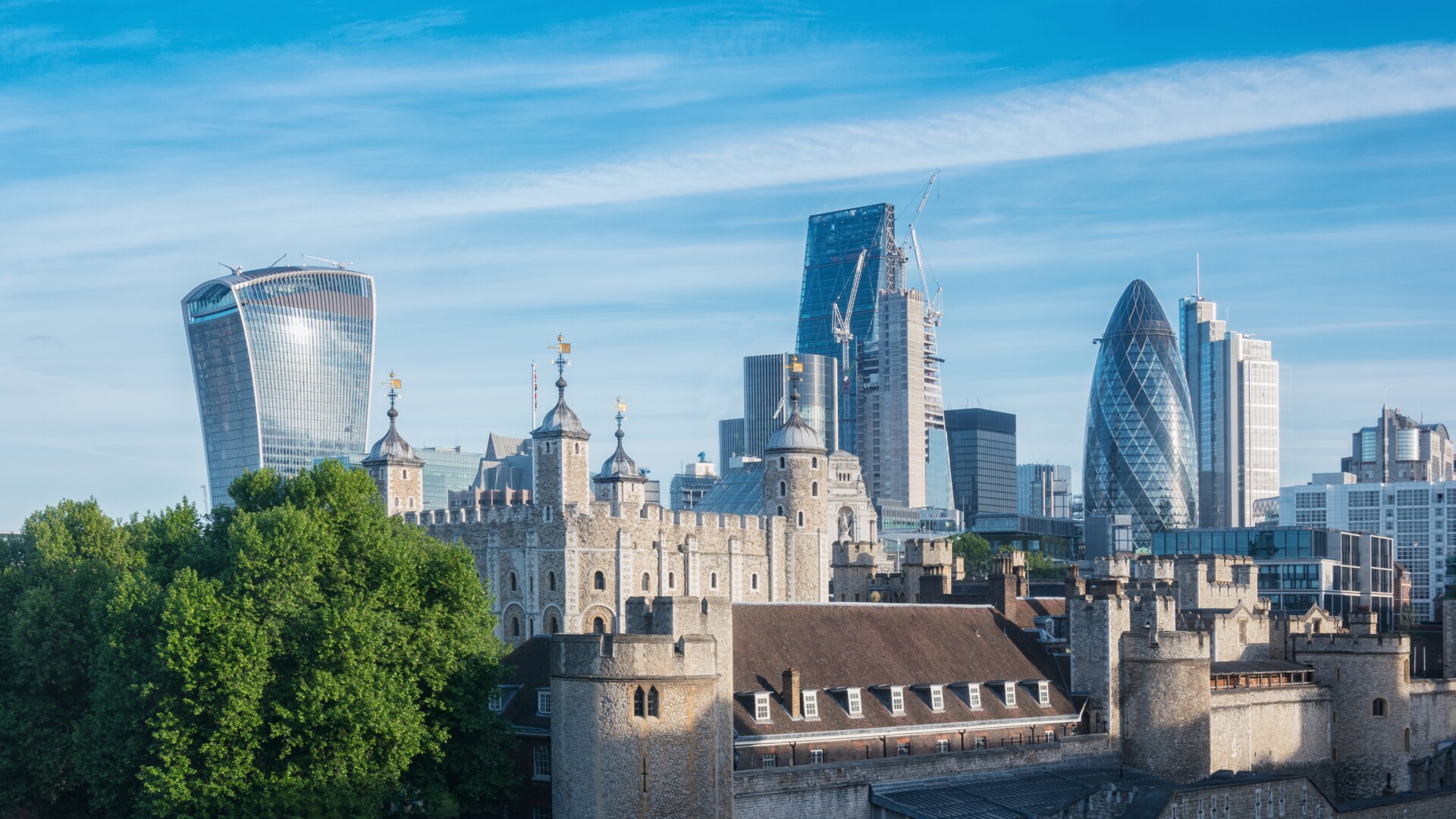
Not all our projects involve data centres. But the same level of resilience, control, and system intelligence applies. This story takes us to the heart of London, where AVK’s control systems power one of the city’s tallest and most iconic commercial buildings.
In the heart of London’s financial district stands a sleek, modern commercial building designed to meet demanding operational requirements. Beyond the glass façade and architectural flair, this building also houses one of the most complex and resilient power control infrastructures AVK’s Control Services team has ever delivered.
This is the story of how we helped bring intelligence, visibility, and full-site coordination to a commercial tower that never stops moving.
A Complex Challenge from the Start
Originally, AVK’s role in the project was clear-cut: deliver and commission four emergency generators and design the high-voltage (HV) control systems to support the building’s backup power needs. The client oversaw the mechanical and electrical scope across the site.
AVK was awarded the first contract to deliver the generator and MV control systems in October 2020. As construction progressed, it became clear that splitting control responsibilities across different systems would introduce risks and inefficiencies. In February 2021, AVK was formally contracted to deliver the full LV control scope as well. The client, in fact, didn’t want fragmented oversight of power operations. They wanted a single, integrated control system to manage it all.
That’s when AVK was asked to go further. We were awarded the full low-voltage (LV) control scope replacing the original PLC hardware in the LV switchboards with our own system and ensuring seamless coordination between all power assets, from the grid to the top floor generators.
Building Resilience, Floor by Floor
Delivering this kind of integration wasn’t just a matter of connecting parts. It meant building a complete control ecosystem across an expansive vertical footprint.
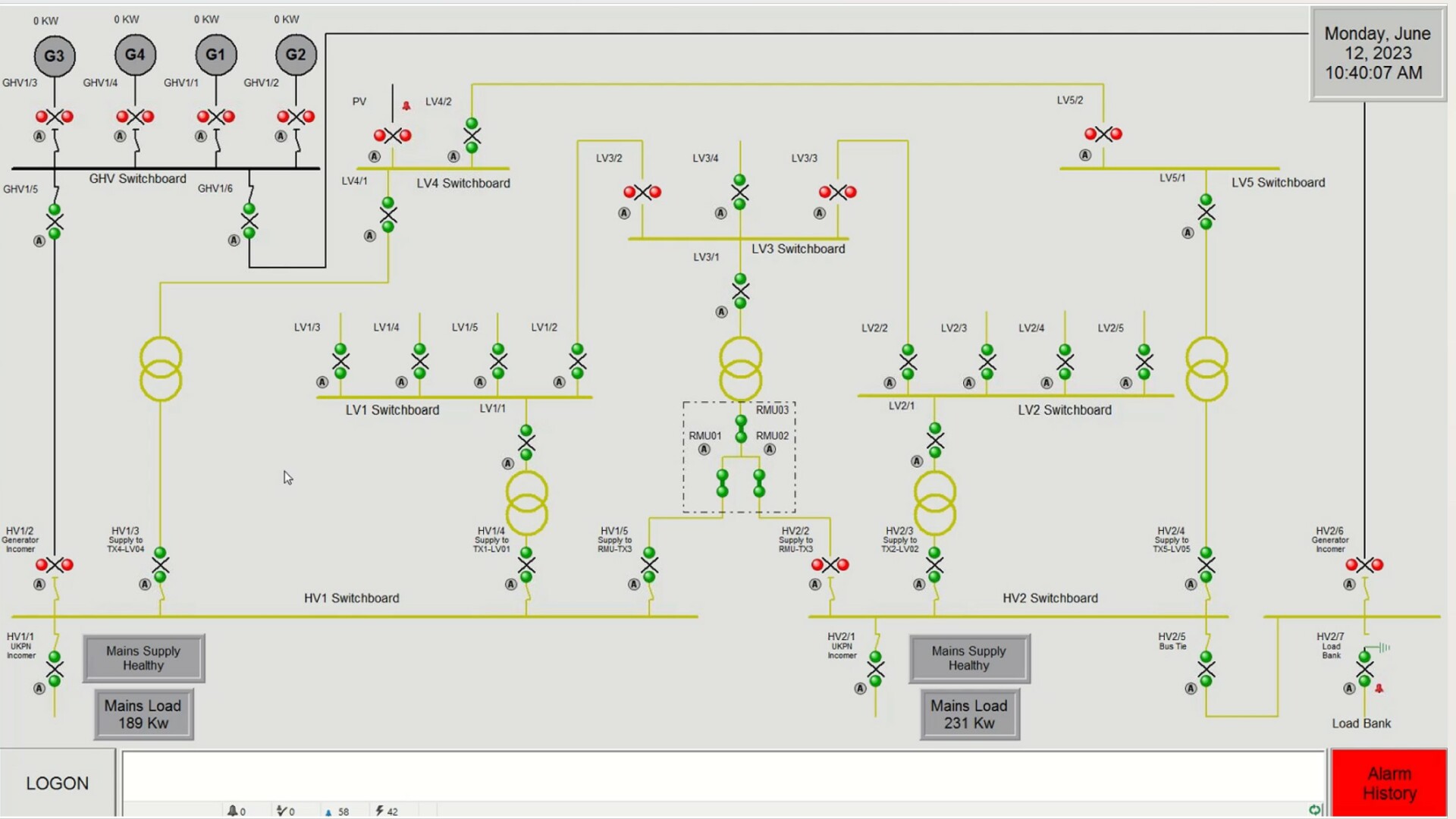
The site’s power design included two incoming mains feeding two medium-voltage switchboards, joined by a ring main unit (RMU) configuration. That RMU fed the Substation 3 LV distribution board with Substation 1 and 4 fed from HV01 and Substation 2 and 5 fed from HV02. These LV distribution boards were spread across the building. AVK’s job was to ensure these systems could talk to each other, act in unison during failures or overloads, and deliver the right power, at the right time, to the right place.
To do that, we implemented a redundant fibre-optic network ring across the entire building. This provided secure, fast, and fail-safe communication between all switchboards and control panels.
The four AVK-supplied generators, installed at upper levels of the building, were connected to the control system alongside the building’s fuel storage, ensuring seamless coordination across multiple levels. The fuel management and generator synchronisation logic had to stretch vertically across the full height of the building, ensuring that, in the event of a power failure, the control system would act instantly to keep operations running.
AVK’s system didn’t just handle failover. It also provided:
- EPMS (Electrical Power Monitoring System) integration
- Automated LV load shedding
- HV switching and scenario handling
- Grounding lift logic
- Generator-to-mains synchronisation
Put simply, the system didn’t just respond to events—it anticipated them.
Delivering Through Disruption
The work spanned nearly three years, much of it during the height of the COVID-19 pandemic. Our team travelled to Kendal in June 2021 for factory acceptance testing (FAT), navigating pandemic travel restrictions and on-site limitations. The building itself was under active construction, with only the basement levels and a few floors complete during initial panel installation.
Our commissioning team returned repeatedly as construction advanced, installing panels and running tests in synchronisation with the build schedule—right up to the top floor. There were long nights and complex shifts, but the result was worth it: the system was successfully handed over in June 2023, marking the culmination of a resilient, multi-year collaboration: a fully unified control system that would power one of the city’s most ambitious commercial buildings.
What AVK Delivered
Beyond the engineering and commissioning, what we delivered was control. Not just over generators or switchboards—but over complexity itself.