The data centre industry is facing a generational skills gap that threatens to open, and widen over the next several years. With the average age of an engineer in the UK being 54, and with little succession planning in place, this gap risks becoming a skills chasm in data centre engineering. It raises the question of if and how the industry can convince a new generation to enter the sector before it is too late?
Attracting and retaining new talent begins with resisting, in the hopes of defeating, some stereotypical attitudes. The Ancient Greeks tended toward the view that younger generations represented a decline in civilisation. A quote attributed to Socrates is illustrative: ‘The children now love luxury; they have bad manners, contempt for authority; they show disrespect for elders and love chatter in place of exercise.’
Jump forward almost two and a half millennia, and too often Gen Z are having to face equivalent doubts and prejudices as they enter the workforce and seek to start careers. But this is far from the only challenge that Gen Z, those born between 1997 and 2012, are forced to confront. As well as the need to prove themselves in the workplace, they are acutely aware of climate change, economic insecurity and global instability as it affects their lives as professionals; adult lives which are only just beginning. In this first of a series of three articles based on interviews with four young adults who joined AVK in the last year, we focus on what the world of work means to Gen Z.
“Generation Z are at the forefront of youth protests about climate change. The income gains and likelihood of security in old age experienced by past generations have stalled, and in some countries reversed. In advanced economies the risk of poverty is shifting from the old to the young. The pessimism about many young people’s prospects in many advanced economies is based not on broad economic trends but on lived experience,” writes Minouche Shafik, President and Vice Chancellor of the London School of Economics (2017-2023), now Baroness Shafik, in her 2021 book, What We Owe Each Other: A New Social Contract. An older and more experienced workforce, such as that which makes up the most of the data centre industry, owe as much to the new generation of workers as the new generation owes to it.
And in the face of such tests and obstacles, individuals from Gen Z portray a maturity level that shows they are well informed, have serious intent, are willing to question perceived norms and have much to offer to meet the challenges of the coming decades.
AVK – Attracting talent with its hiring policy
Entering the world of work can be a daunting experience. What happens in those first few weeks and months can shape perspectives and individuals.
We asked two graduates Megan O’Connor, AVK Lead CAD Engineer and Mechanical Engineer, Filippos van Ryswyk, alongside Austin Warriner and Conor Tillett, both Trainee Service Engineers, about starting and growing their careers with AVK.
Megan is AVK’s first Lead CAD Engineer. Though she did a placement in CAD during university, Megan ‘didn’t think it was the sector [she] was going to go into.’ She joined AVK following stints in kitchen design and as a solar power system CAD technician. She was promoted to her role early in 2025.
‘At AVK I started off as a CAD Engineer in sales. But now, as lead, I cover the CAD team in London and the operation side of the CAD team in Maidenhead,’ she says. ‘After I’d dipped my toes in power generation, you can just kind of fall into this thing called the data centre industry.’
Another relatively recent addition to the AVK team is Filippos van Ryswyk, a 22-year-old Mechanical Engineer who first heard about the company at his University STEM fair. He says, ‘Friends who were doing internships told me about AVK,’ and ‘I became interested as I was looking for a grad role. So here I am, 10 months later, working in the data centre prime power sector. It’s a challenge, that’s for sure. But it’s so much fun.’
A common theme among some Gen Z individuals interviewed here is that they find themselves in the familiar conundrum of dealing with rejection and struggling to find a first career job.
In an economy where many people’s first working experience is a choice between gig economy based, low-skilled retail or hospitality employment, they find that despite a willingness to learn and apply themselves, companies are too often unwilling to invest in training to develop skills.
Their experience is the age-old chicken and egg issue of not getting a job due to lack of experience and not having experience due to lack of a job.
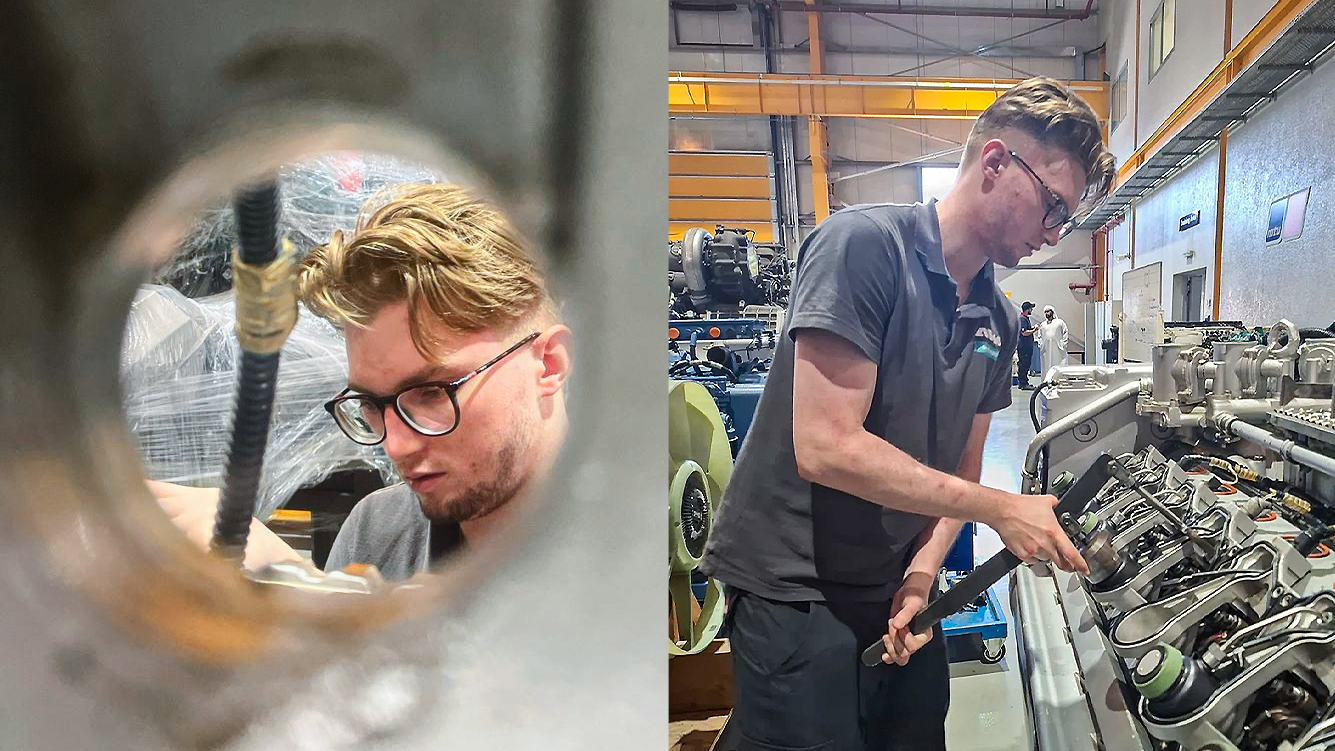
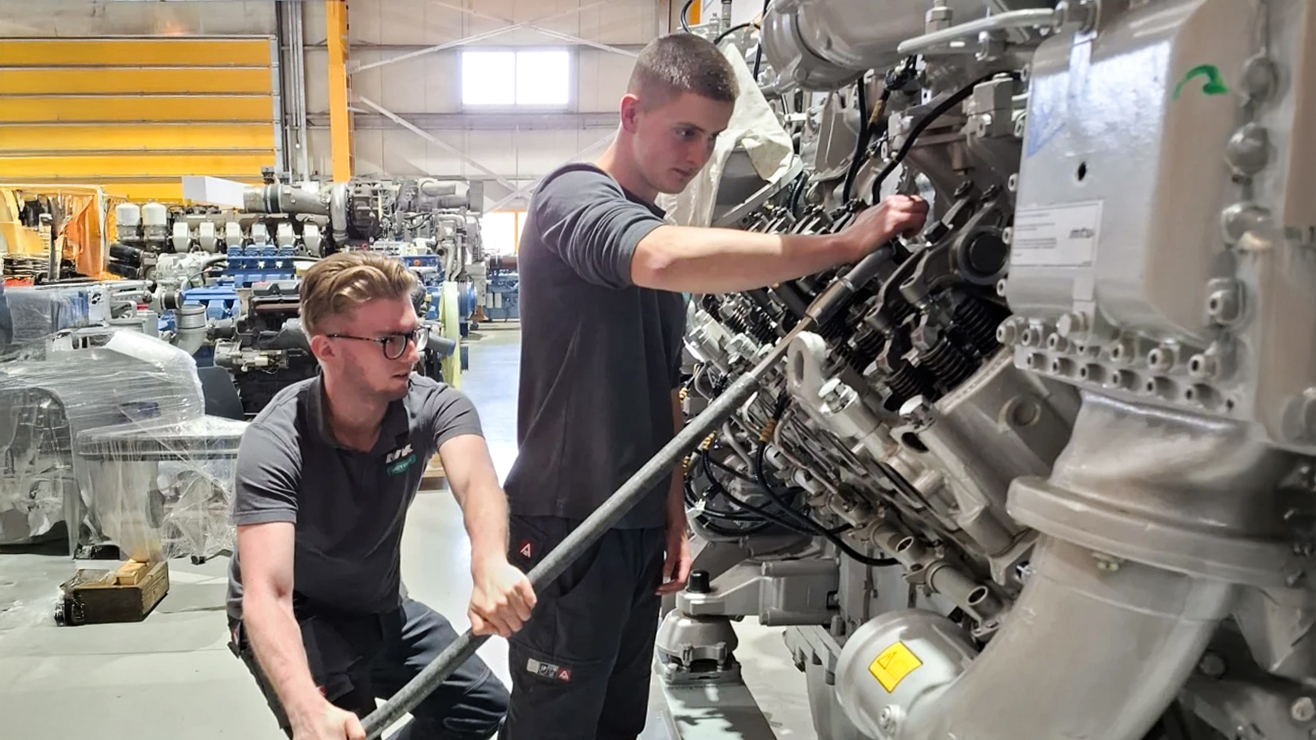
Conor Tillett and Austin Warriner joined AVK as Trainee Service Engineers in late 2024.
‘I don’t think everyone is fortunate enough to know and plan for what they want to do as a career. So, wherever you land,’ says Conor, ‘enjoy it’ and ‘just keep going at it.’
In terms of starting a career, with ‘the way the world is at the moment, things are quite hard to get into’. ‘But with AVK,’ he continues, ‘it looked like they were trying to push for more young people. I think it is something more companies need to do.’