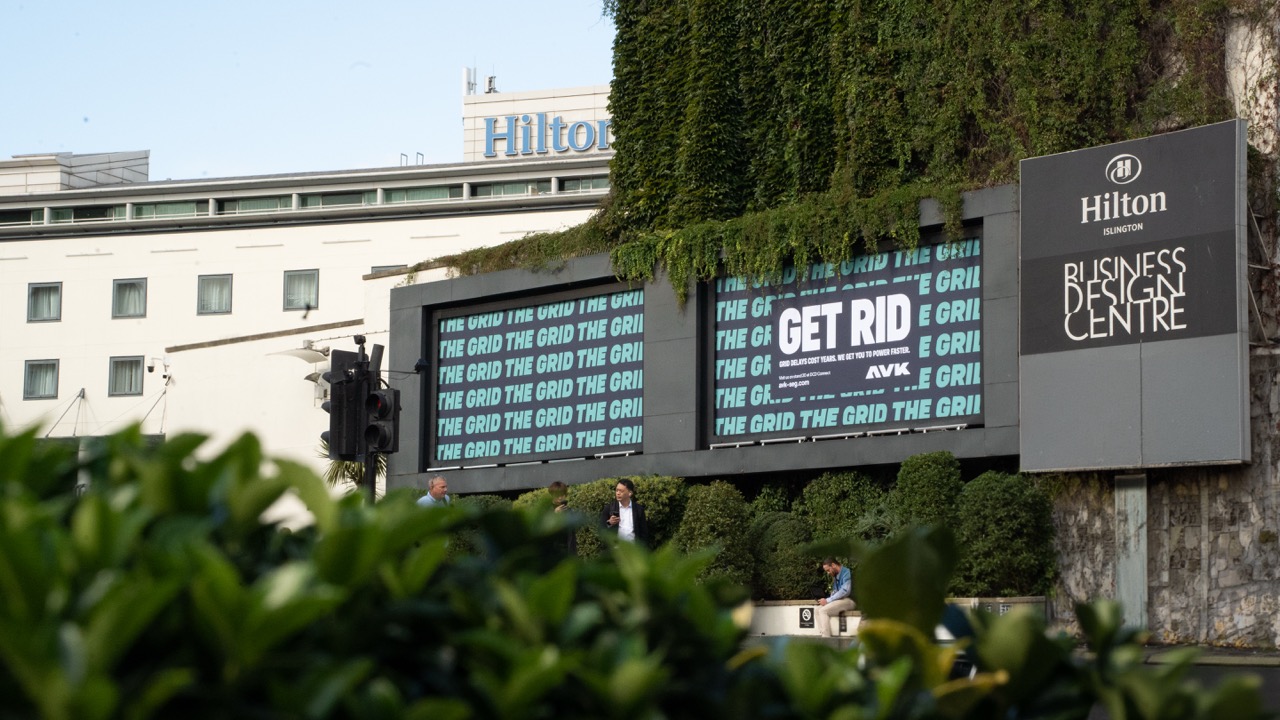
Mental availability in a market that does not make it easy
None of this is simple in B2B, and it is especially hard in a sector as complex and technical as data centre power. Our buyers are not making impulse decisions. Sales cycles are long, the people involved are specialists, and the stakes of getting the power infrastructure wrong are high.
That is exactly why mental availability matters so much here. When a buyer finally reaches the point of choosing a partner, we want AVK to be the name that comes to mind first, built up not through one perfect pitch, but through months and years of consistent, recognisable, trusted presence.
Distinctiveness matters even more when you look at how similar most brands in our space still are. Same blue and grey colour palettes, same stock photography of products and server rooms, same language about being trusted and reliable. When everyone looks and sounds the same, standing out becomes an advantage in itself, not just a design preference.
The visibility chart above is, in a sense, a mental availability chart. It shows the slow build of a brand that is becoming easier to recall in a category full of technical noise. And recall does more than help a buyer remember our name. Familiarity builds confidence. Buyers feel safer choosing a name they already know, and that matters even more in a sector where getting power infrastructure wrong is expensive and hard to undo. Mental availability, in that sense, is not just about being remembered. It is about being trusted enough to be chosen.
Why marketing can no longer be a nice to have
There is a broader shift happening that goes beyond AVK. Data centres and AI infrastructure are under more public attention than ever, on energy use, on water, on planning applications, on what these buildings mean for local communities. That attention is not going away.
For years, this industry could operate with a narrow, purely B2B communication style: technical, quiet, aimed only at the people who buy the equipment. That is no longer enough. When the general public starts asking hard questions about an industry, that industry needs a voice that speaks to more than just its buyers. It needs a real story, told in a way that a non-technical audience can understand and, ideally, trust.
This is why branding, marketing and storytelling have stopped being a “nice to have” for companies like ours. They are becoming a core part of how the business earns and keeps its social licence to operate, alongside its ability to deliver good engineering.
Reputation and authenticity: The new price of admission
If marketing has become central, reputation is quickly becoming the thing it is actually protecting. In our sector, reputation is no longer just about how a brand looks in a press release. It shapes whether a planning application gets local support, whether a community welcomes a new site or fights it, and whether investors and partners see a company as a safe long-term bet. It has become as strategic an asset as any solutions we sell.
That is where authenticity comes in. A polished narrative that avoids the harder questions does not hold up for long, especially with an audience that is already sceptical of data centres and AI infrastructure. People notice when a company only talks about the upside of its industry and stays quiet about its footprint. Every claim or evasive answer affects the trust we are trying to build.
This is why, as an industry, we need to get more comfortable being honest. That means naming the trade-offs of what we build, energy and water use, land, noise, alongside the benefits, and talking about them before we are forced to by a journalist or a regulator. An honest approach is slower and less flattering than a purely promotional one, but it is also the only kind of reputation that survives real scrutiny.
Final thoughts: What this means for marketers in DC and AI infrastructure
If I had to summarise where our brand, and in general, branding in this market is heading, I would say four things.
First, be distinctive, and treat mental availability as a discipline. Too many brands in this space still look and sound the same, and being genuinely recognisable is one of the few advantages left that is hard to copy. It comes from a consistent visual identity, consistent language, shown across many channels over a long period. Our own visibility trend is the proof.
Second, storytelling and narrative are no longer optional. Creating a category, as we are doing with EaaS, is not really a product exercise. It is a storytelling exercise. You have to teach the market a new idea before you can sell it, and that takes a clear, repeated narrative, not a spec sheet.
Third, talk to a different, wider audience. This industry cannot speak only to its buyers anymore. A public that is asking hard questions about data centres and AI infrastructure needs to hear from us too, in language it can actually follow, not just delivery teams and engineers.
Fourth, treat reputation and authenticity as core marketing work. Build the honest version of the story before you need it, not after something goes wrong. In a sector under this much scrutiny, the brands that are straightforward about their trade-offs will be trusted more than the ones that only ever sound perfect.