Back to articles

Decarbonising Behind-the-Meter Power: How it Works

Category
AVK thinking
Date
28 May 2026
Author
AVK
Read Time
7 min

In the face of AI-driven growth and grid capacity restrictions, one of the greatest challenges the data centre industry faces is how to decarbonise dispatchable on-site power. At AVK, we're making moves to tackle this challenge.

In the face of AI-driven growth and grid capacity restrictions, one of the greatest challenges the data centre industry faces today is how to decarbonise dispatchable on-site power. At AVK we have tackled this challenge, combining new technologies and forging a partnership of pioneers that can convert gas-fired Behind-the-Meter (BtM) generation into clean, flexible, dispatchable energy. BtM refers to generating and managing electricity on-site at the data centre, rather than relying solely on grid supplied power. This approach enables more efficient energy usage, real-time control over carbon emissions, and resilience against grid disruptions.

Where it is practical, carbon capture can be a massive step towards designing a net-zero self-powered data centre. Here´s how it works and what it could mean for the data centre industry.

Our carbon capture partnership

In a UK industry first, we have partnered with a group of innovative industry leaders to develop low-carbon,  BtM solutions tailored for data centres. As part of the partnership agreement AVK will work with Landmark Power Holdings (LMPH) who with their patented FLEXPOWER PLUS® technology are specialists in efficient low carbon power generation. The solution deploys Rolls-Royce mtu gas reciprocating engines, Organic Rankine Cycles (ORCs) for increased efficiency, and ASCO CARBONDIOXIDE carbon capture technology, integrating them into advanced microgrid systems. AVK’s role is to lead on design, planning, implementation and maintenance, including engineering, procurement and construction. 

Our solution also provides offtake opportunities for carbon sequestration and utilisation – in which the CO2 is scrubbed to food grade and can be sold to the food and beverage industry –  and we believe that the partnership, which includes a planned project pipeline, will accelerate the commercialisation of carbon capture technology for data centre operators.
A pioneering partnership for data centre carbon capture

How it works

FLEXPOWERPLUS® is a combination of high-efficiency flexible power generation modules and carbon capture and utilisation (CCU) modules. Each of the modules can be added to the generation processes depending on the site and generation needs. The modules enable higher efficiency, and capture the carbon either for reuse (creating an additional revenue stream) or for sequestration.

When you combine these modules, the power generation is classified as low carbon. Because of the modular design, the system can be scaled up or down to suit almost any size requirements.

The process can be summarised as follows:

  • Natural gas is combusted via MTU natural gas generating sets, producing electricity, heat and exhaust gas.
  • Waste heat from the engine cooling circuit is diverted to low temperature ORC turbines (turbines that use the expansion of a vaporised organic fluid, instead of steam) to generate either additional electricity, or heat which can go direct to district heating or industrial processes. 
  • The exhaust gas is fully recovered and used in the ASCO carbon capture process.
  • A selective catalyst reduction system (SCR) abates the raw exhaust gas, removing the  NOx. The remaining exhaust gas is passed through a scrubber for cleaning and cooling.
  • It then enters the absorber where the CO2 is extracted using a solvent.
  • The CO2-rich solvent is then heated by recovered heat in the desorber (a piece of equipment used to remove absorbed substances), releasing the CO2 gas.
  • The CO2 is processed and purified to the point that it meets International Society of Beverage Technologists (ISBT) specifications for use in foods and beverages.
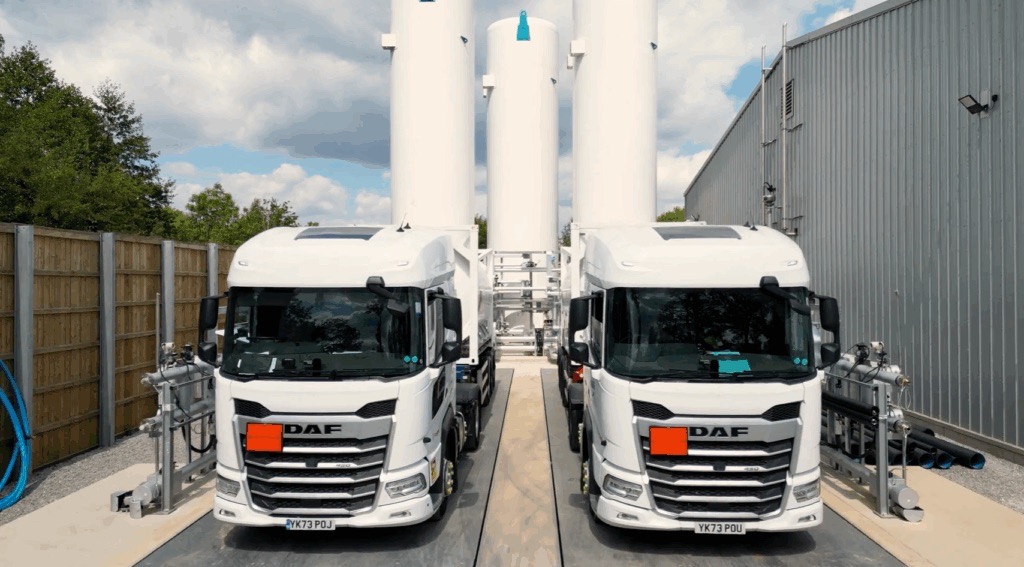
  • The CO2 is then liquified to allow for easy storage in outdoor towers, ready for transport.


See this in action in a short video from Landmark Power Holdings.

GHG reduction

The capture process extracts up to 95% of the total volume of CO2 gas content in flue gas streams. 

Monetising carbon: From CC to CCU

With our joint carbon capture solution, CO2 can be monetised rather than released, not only benefitting the environment but also providing measurable financial value. This is known as Carbon Capture and Utilisation (CCU). CO2 is needed in the food and beverage industry, where the captured carbon dioxide is purified and used for carbonating drinks, flash-freezing food, and in packaging to extend shelf life (e.g. dry ice). It is also a key raw material in the manufacture of other products like chemicals, fuels and building materials, and in agriculture where it is injected into greenhouses to boost plant growth.

Our solution provides a new financial model for BtM power generation, with potential revenue streams from both heat and CO2. For grid-connected solutions, there is also the potential for income from CMU payments. A CMU is a unit of electricity generation capacity or electricity demand reduction that can be put forward in a future Capacity Market auction.

The CCU solution in action

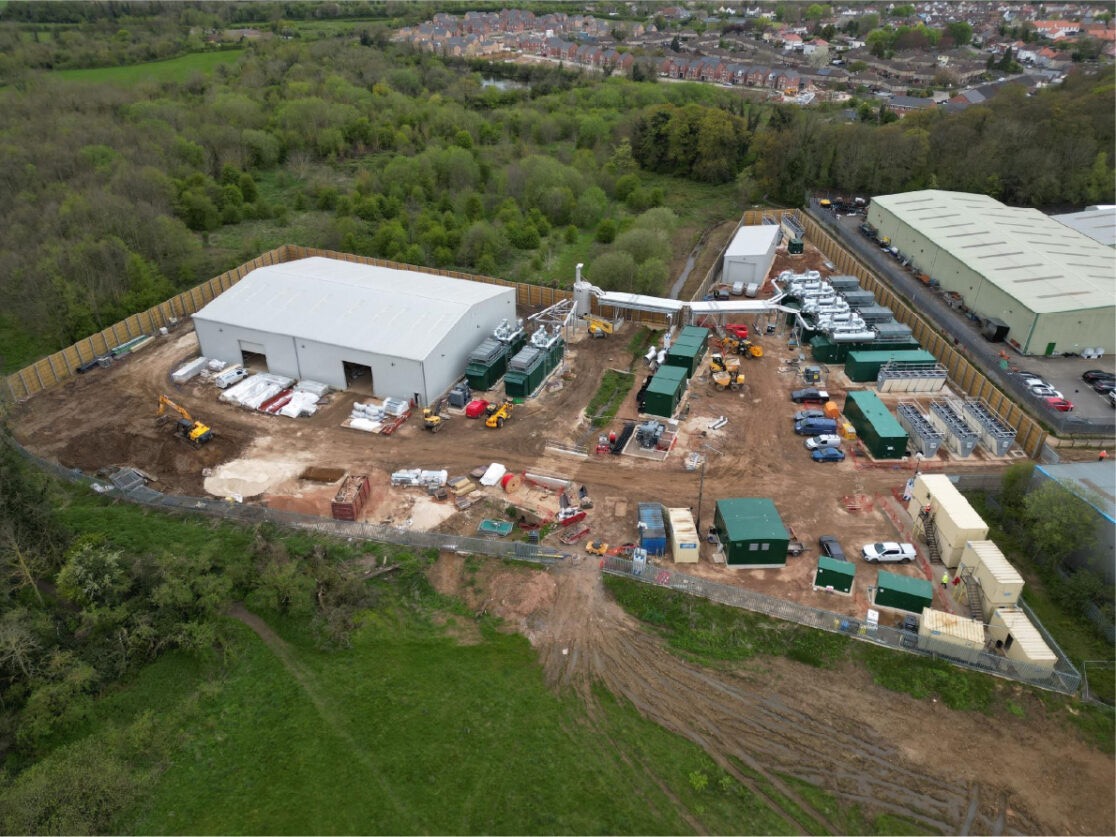
Working with MTU Rolls-Royce Solutions UK, ASCO CARBON DIOXIDE LTD and others, AVK partner LMPH has already deployed the solution at a 10MW peaking plant in Worksop, North Nottinghamshire. Construction began in March 2022, with first power production in March 2024. The first CO2 was captured in February 2025, and the plant is now in full commercial operation. The plant uses six series 4000 L64FNER gas engines, and has a capture capacity of up to 30,000 tons of CO2 per year. The waste heat from the Combined Heat and Power (CHP) units is used to power the recovery process, making the overall system highly efficient. The CO2 generated by the engines is processed and liquefied to produce high-purity food-grade carbon dioxide. The photo above shows the first commercial offtake of CO₂ from the site, which powers up to 10,000 homes, provides quick dispatchable balancing power to enable greater use of renewables.

Project pipeline

The partnership already has a number of projects in the pipeline. Our UK Power Generation with Carbon Capture project pipeline currently covers around 50 MW across various sites, although not all projects are confirmed.  The pipeline includes a 20 MW site in Dagenham to the east of London, which could capture up to 60,000 tons per year. AVK operates internationally and so will our power generation and carbon capture capability, which we plan to roll out across Europe over the next few years.

The operator’s opportunity: Add carbon capture to your list of options

The current energy crunch is creating numerous challenges for the data centre industry, but they are not insurmountable. A constant focus on innovation is the key to solving them, along with proactive collaboration and openness to new and different technologies.

Our CCU partnership will pioneer a new route to reliable, low-carbon energy that will not just meet the urgent need for sustainable data centre power solutions but also pave the way for future ground-breaking developments. It is a vital next step in the journey towards fully integrated, low carbon microgrid ecosystems designed for the critical power demands of modern data centres.

When planning a new project where grid supply is either not guaranteed or subject to delays, data centre operators can now frame their RFPs to demand that power solutions integrate carbon capture, and even carbon monetisation.