Forecast European data centre power demand growth 2024 – 2035. Data for the image below is based on findings from ICIS.
Back to articles
Powering European Data Centre Growth
Our core market is expanding fast across Europe, and we are expanding to keep ahead of it. The industry is rising to this challenge with its usual resourcefulness, however at the same time, the challenges for data centre operators are getting bigger.

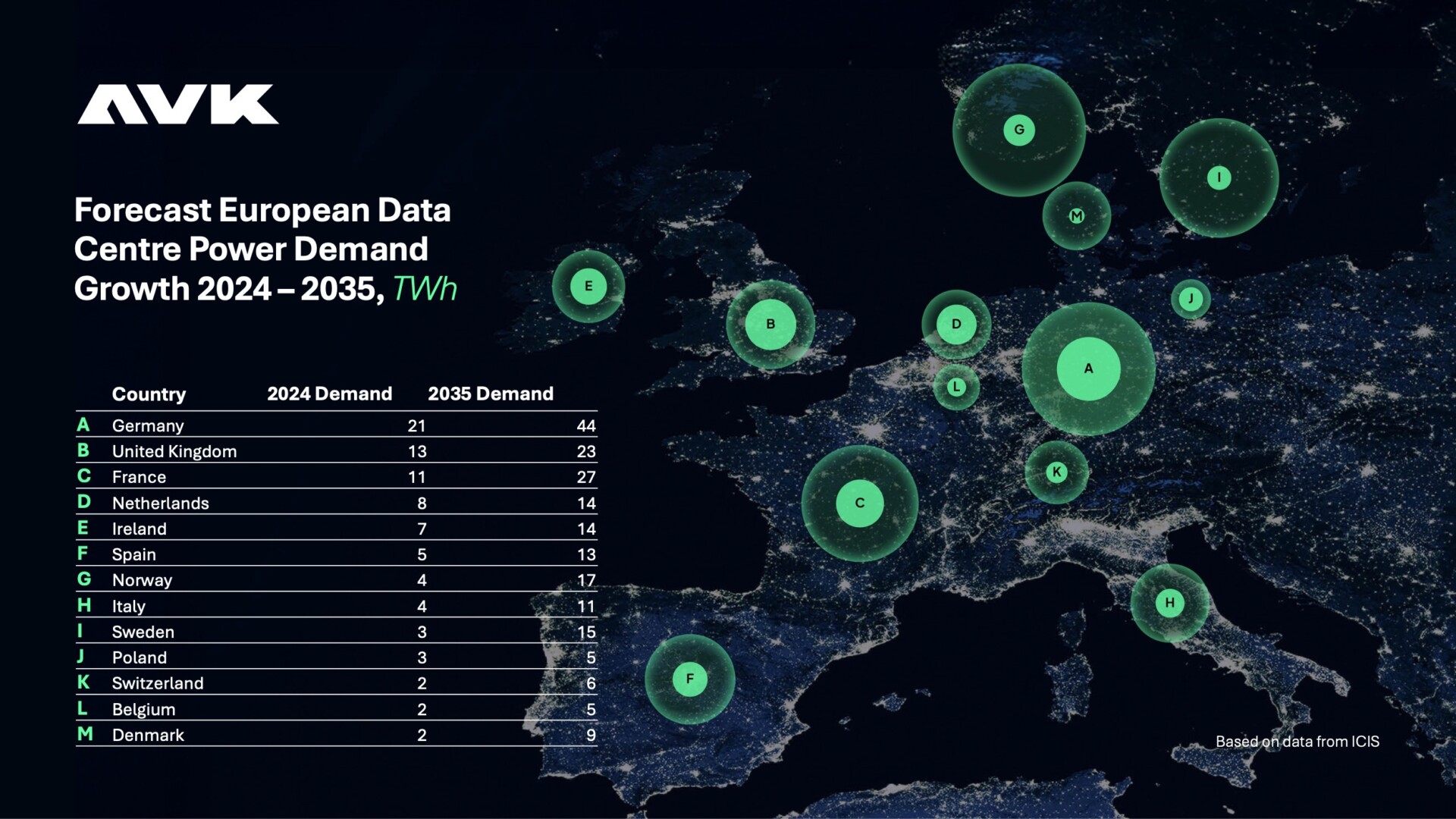
Our core market is expanding fast across Europe, and we are expanding to keep ahead of it:
- European data centre capacity has risen by 22% in the last year to exceed the 10 GW mark.
- Take-up is set to grow at its fastest rate in four years this year.
- For the third year in a row supply will fail to keep up with demand.
- This is pushing up prices and moving the deal-making zone for data centre providers further into the future, with pre-leasing taking place three or four years ahead of completion.
The industry is rising to this challenge with its usual resourcefulness:
- The development pipeline has grown by 43% in the last year.
- 6 GW of capacity is under construction and 25 GW of new capacity is forecast by 2030.
- Capital is flowing in fast to build this pipeline, and annual investment is forecast to double to almost €100 billion by 2030.
However, at the same time the challenges for operators are getting bigger:
- Facilities are larger than ever, with campuses often exceeding 100 MW.
- Data centres are more geographically distributed than in the days of complete FLAP dominance.
- They also need to meet much stricter environmental criteria, some local, some self-imposed and many EU-wide.
And, as the grids of Europe creak under the demands of a wholesale transition to net zero, the single most challenging feature for any successful AI-focused development is power.
The following are a few suggestions of the best way the power solutions industry can address these challenges and support the sector´s ambitious growth.
Scale up to keep up
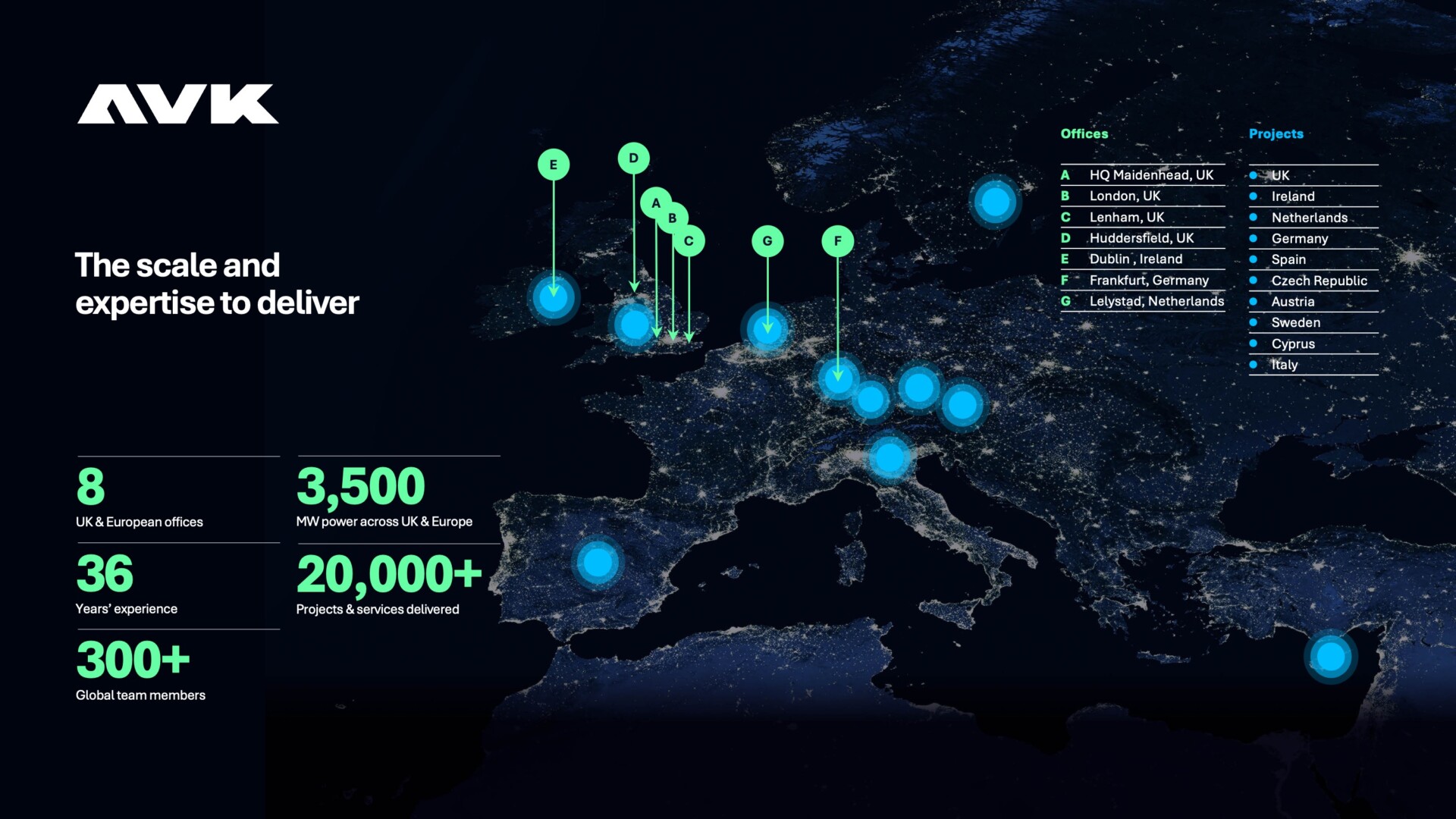
It is an exciting time to be providing power solutions to one of the fastest-growing sectors in the world, but we have to invest for growth. AVK has expanded its services and developed new solutions, and today, we are the UK´s leader in innovative power solutions. We are also becoming a major player in data centre energy solutions across Europe.
We have provided over 3.5 GW of power solutions in over 300 projects, and are now supported by a 300-strong team with some 20,000 years of experience between them. Today, we have projects in Sweden in the north and Spain in the south, Ireland in the west and Turkey in the east. There are more support hubs in the pipeline to support existing and future customers across Europe.
This spring we set up a new service hub in Lelystad in the Netherlands. Next in line is Frankfurt, still second only to London in terms of capacity growth. As in London, Dublin, and Lelystad, our Frankfurt hub will offer local warehousing, critical spares and expert technicians. For multi-country solution providers like AVK, it is critical to invest in distributed, well-staffed service infrastructure to provide the highest levels of in-country support for data centre customers as they expand. A dedicated team of technicians expands our local service capability (for instance for the selective catalytic reduction (SCR) systems we install for clients), enhances responsiveness, improves logistics and strengthens relationships.
These investments take our current European office footprint to eight, to support our growing spread of client projects. More will be needed.

Invest in people
There is a widely-recognised skills gap in the technical side of the data centre industry. The average age of a UK engineer is now 54, and with little succession planning in place, this gap has the potential to undermine the quality of data centre engineering unless we can attract and support the ambitions of candidates from Gen Z, an issue we have explored in some depth in a series of interviews. Considering the pace of forecast growth, this is a dangerous situation. We should be doing something about this now rather than later, with a focus on the critical, and evolving, skillset required for power provision and data centre operation.
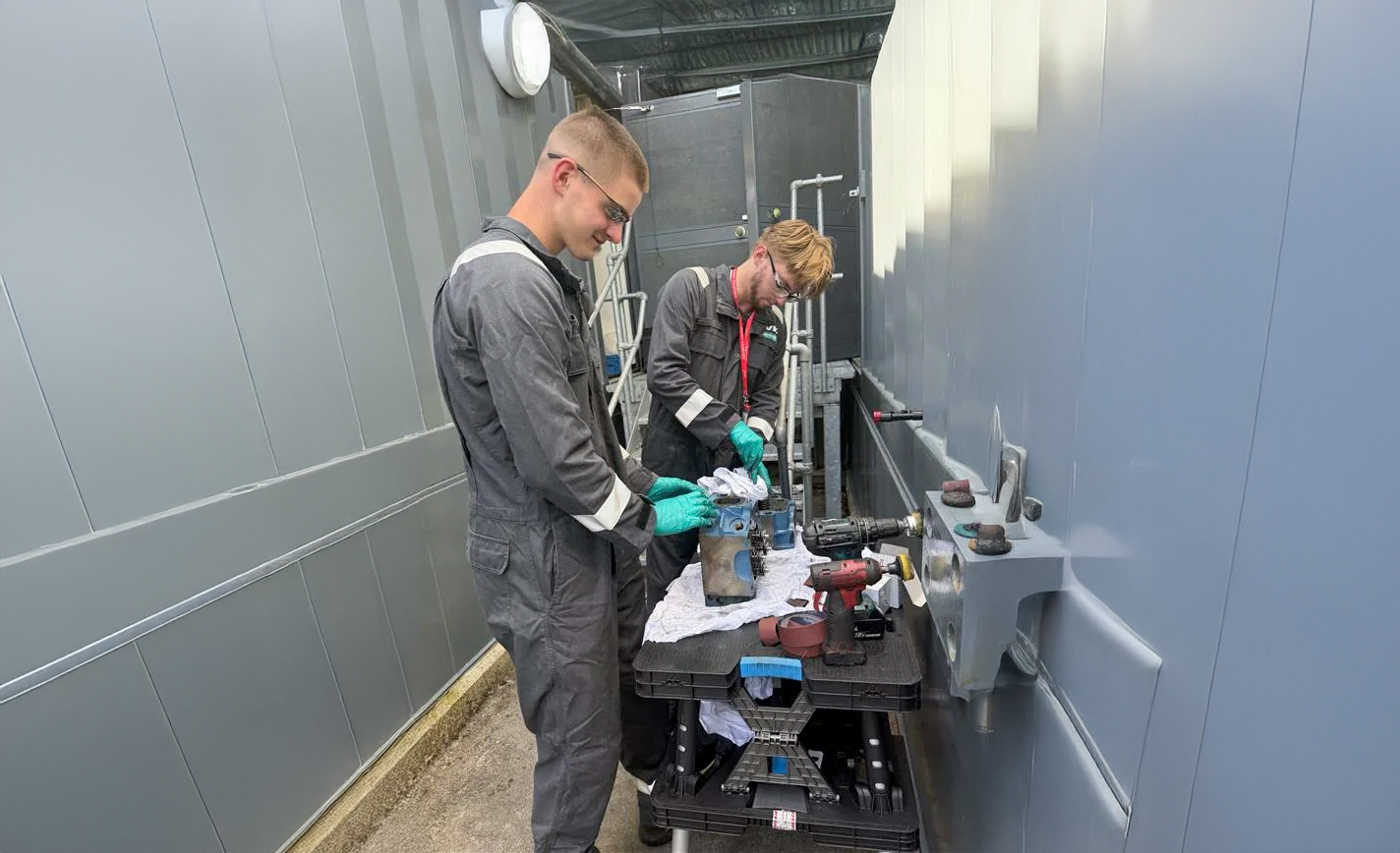
For instance, AVK´s new service hubs will support the international roll out of the AVK Academy. This is a dedicated training centre that plays a vital role in developing the next generation of data centre engineers. Equipped with state-of-the-art technology, including full-size engines and control system rigs, the academy recreates real-world scenarios, ensuring that trainees gain the practical experience required to build successful careers.
Data centre build, power provision, and operation is one of the most promising and satisfying career paths, but it is relatively new and requires investment by the industry to formulate and facilitate world-class courses. To close the skills gap, we need to offer structured training programmes certified by national educational authorities that cater for every level of experience, from beginners embarking on their careers to seasoned professionals seeking new advanced skills.
Invest in partnerships
Weak links in the supply chain can cause projects to go wrong, with delays and extra costs particularly severe during periods of intense demand. It is one of the ironies of the AI boom that the redesign of data centre projects to accommodate liquid cooling for GPUs has delayed many build starts, meaning that a lot of this new capacity will need to be built all at once. Having close relationships with a growing range of innovative world-class partners can streamline the supply chain and support customers with their ambitious timeframes, without compromising quality or environmental impact.
For this reason we concentrate on having a geographically diverse and high quality set of suppliers and partners. This covers every power solution component from engines to acoustic containers to switch gear to fuel tanks. The partner list is constantly growing, as we take on more projects in more markets, and we source key components locally wherever possible to keep costs, delivery times, and embodied impact down. Our quality team visits every potential key supplier to check the quality of components and processes first hand, as well as ensuring that their accreditations match our compliance programme.
The most significant pinch point in power solution provision is engines. For this reason, AVK has exclusive partnerships in the UK and Ireland with Wärtsilä and Rolls-Royce mtu, who provide our prime (up to 23 MW combined cycle gas turbines) and backup (up to 3.2 MW high-speed diesel/HVO) engines respectively. The stronger the partnership is, the easier it is to price, plan and implement projects. For instance, our Rolls-Royce mtu partnership, which has now been in place for six years, includes a dedicated factory allocation for hundreds of high-speed diesel/HVO engines, which gives us and our customers an edge when it comes to planning and delivery.
The other advantage of strong partnerships is getting priority access to innovative new products. With Rolls-Royce mtu we have led the way on HVO-powered generation. We also collaborate closely with partners on emission treatment and reduction and low-to-no carbon fuels, and all of our power partners give us access to their advanced R&D and new fuel models ranging from HVO100 (a carbon-free diesel substitute) to hydrogen.
Think bigger
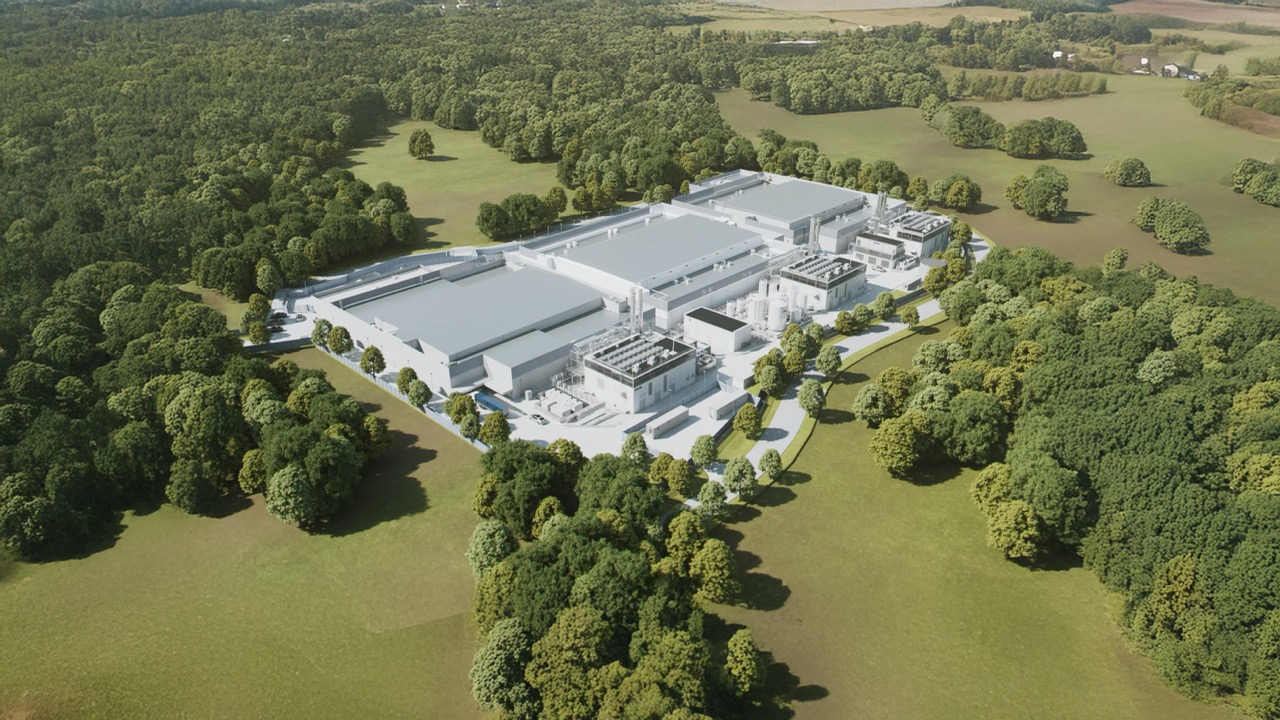
More than any other, the data industry needs to focus on the future. A huge amount of innovation is taking place as we tackle the twin challenges of rising power requirements and a managed transition to net zero. Bold thinking and new business models will be required to balance these challenges, and innovative solution providers are more likely to succeed, while benefiting the data centre sector as well as the environment. AI itself, while driving the power demand, will also be a hugely useful tool in developing, testing and launching these innovations.
Renewable fuels for backup such as HVO are already available and there is seldom a good excuse for not using them. New fuels such as hydrogen, biomethane, methanol, and ethanol are also gradually coming onstream. To minimise emissions, power solution providers need to ensure that they provide the best possible power delivery mechanisms with a future carbon-free fuel map built in.
Creating flexible dispatchable power assets which contribute to grid stabilisation and accelerate net zero also represents a huge opportunity for the industry, and simultaneously solves the current power constraint issues for the industry.
In the EUDCA’s recent State of European Data Centres 2025 report, 4% of colocation and hyperscale operators interviewed said that microgrids are already a realistic option for them, 14% said they will be in two years, and a further 36% said they will be in five years.
Practical solutions are already available. AVK has been conducting new research on this topic with one of our partners, to find the ideal mix of fuel and test the economics of large-scale behind-the-meter generation. Innovative power solution providers will be able to fill a new role here in managing the build and maintenance of microgrid-generated power at the same time as trading it on behalf of data centre customers to support Europe’s grids during transition.
Generating new benefits
Over the last five years the European data centre power solutions sector has enjoyed exceptional growth while improving overall efficiency and keeping environmental impacts low. The next five years look even more exciting, with even greater potential to expand the digital economy while generating economic, social and environmental benefits.
Strategic investment in customer service and sector skills will be key, as well the development of bold new partnership-driven solutions based on new fuels and technologies, and creating new models to provide the responsible power data centres need to deliver digital transformation.