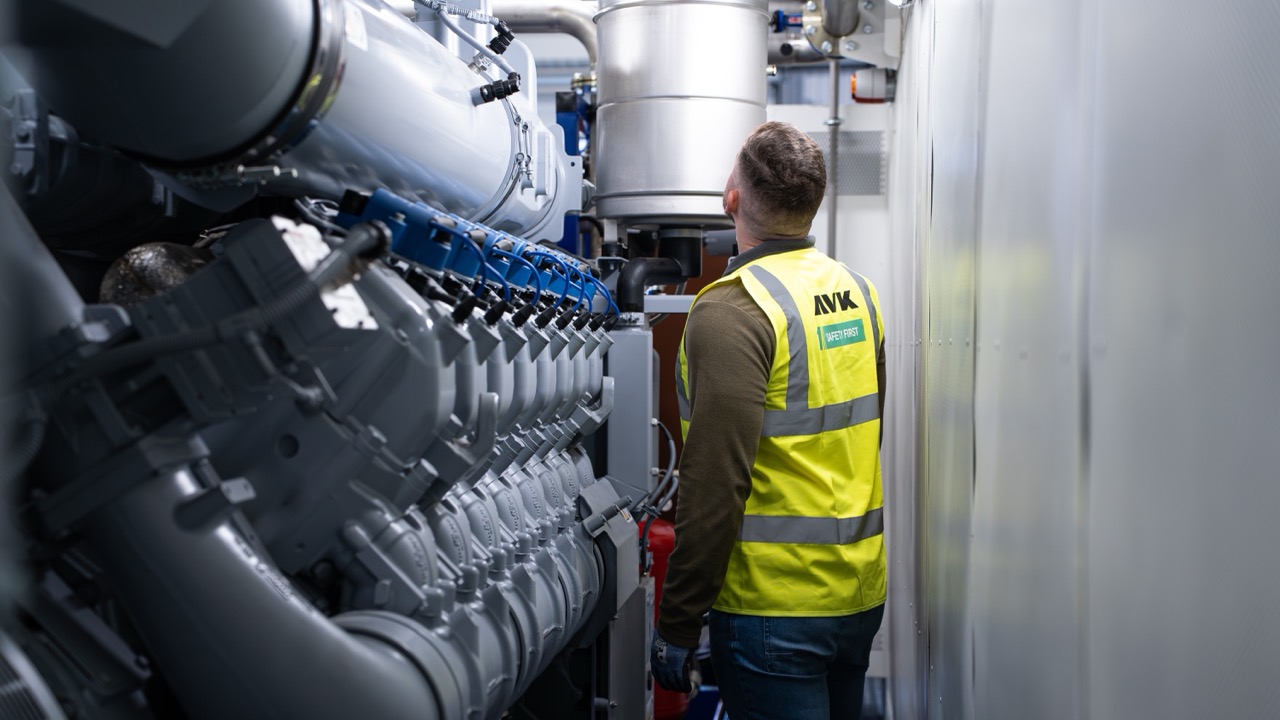
Customers cannot just plug in to the grid and flick a switch any more. Higher power densities for AI are driving up Behind the Meter (BtM) builds, with new energy storage and reuse options, renewables integration and emission mitigation technologies making for more sophisticated and flexible power solutions. As facilities get bigger, associated risks rise too, and small errors are magnified. These are complex challenges, and only physics holds the answers.
The move behind the meter
New DIY sources of prime power are transforming the industry. A recent survey by Bloom Energy highlighted the sudden rise in the data centre industry´s approach to microgrids. It found that, faced with lengthening interconnection queues for grid connections, data centre decision makers expect that by 2030, 38% of facilities will have at least some onsite power generation, and 27% of facilities will be 100% independently powered. This is a striking contrast to last year’s survey, which predicted that 13% of facilities would be partially self-powered and 1% fully self-powered by 2030.
Where interconnection queues are very long, full BtM builds can be completed before a grid connection becomes available, with timeframes as short as 18-24 months for solar and storage or natural gas. In addition to faster access to power, BtM solutions can contribute to peak shaving. Where a mix of grid and on-site power is required, grid support can accelerate connection times significantly, bringing major business benefits. And microgrids also enable new renewables to be added, filling the gaps in supply when the sun does not shine or the wind does not blow.
Other technological improvements are also coming thick and fast, particularly when it comes to emission management. New low carbon fuels, carbon capture and reuse, better exhaust after treatment for generators, can all be incorporated in the planning concept. These drive down environmental impact, but they all take up space and require detailed calculations.
New skills, new pitfalls
This exciting new era requires an additional skillset, which AVK can provide. However, in our experience, power design considerations are frequently not fully thought through in advance of business cases or planning applications. At the least, this causes inefficiency and slows project commissioning. In some cases it is far worse, requiring wholesale redesign, or causing wrong-sizing of the power overhead, unwanted emissions and financial waste.
Stories illustrating these design issues are widespread. On the power side, they include preliminary designs in which engines are stacked on top of each other, and where CFD (Computational Fluid Dynamics) modelling has not been done, or no provisions made for secondary fluid obligations (alternative onsite fuel storage requirements). These sorts of issues don’t just add millions to construction costs. They require additional consultation and planning submissions and they change the fundamental design. They can lead to component changes, they delay completion, and can also have an impact on reliability/uptime numbers and operational maintainability.
The right-sizing of power is also critical to efficiency and environmental impact. Power requirements can get hugely over-inflated in the name of “future-proofing”. Excessive system redundancy can multiply the energy used by several times. This is inefficient and unsustainable.