Back to articles

Ireland: A Blueprint for the Future?

Category
Tech Article
Topic
expertise
Date
29 January 2026
Author
Lawrence Grace, William Rollinson, Anthony Gibson, Clive Westall
Read Time
5 min

What the latest developments in one of the world's most power-constrained markets can teach us about the future of European data centre power.

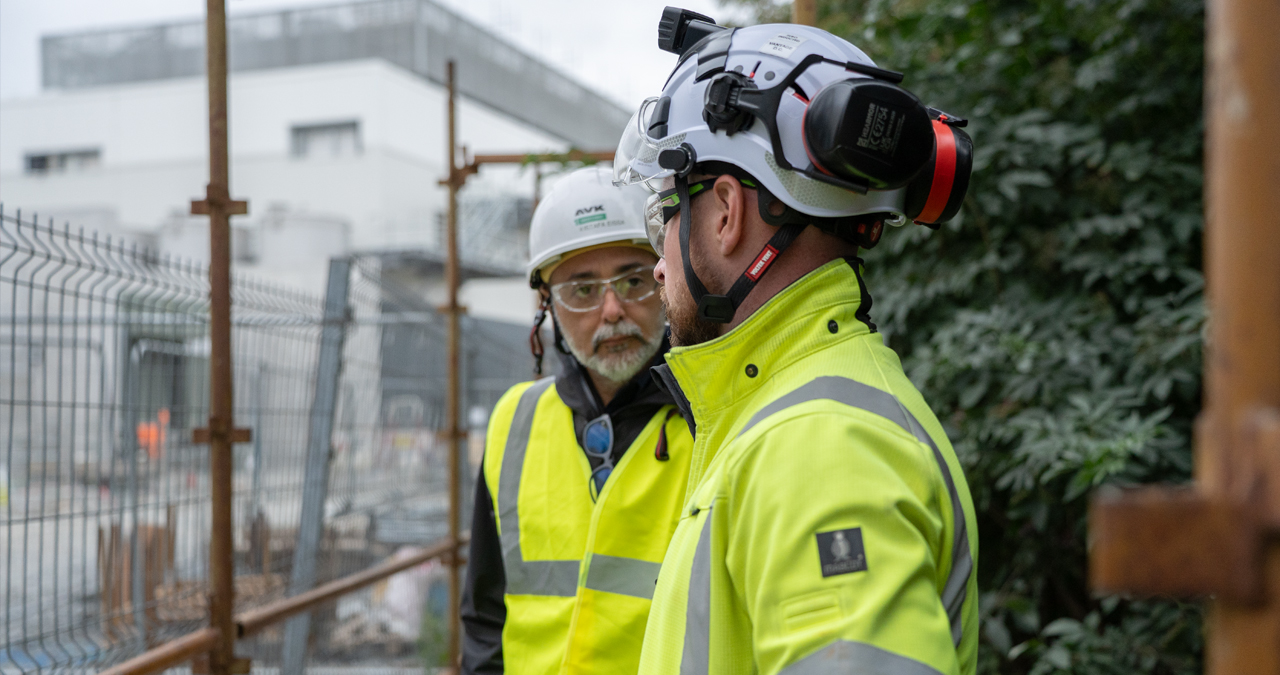
AVK staff on data centre site

The Irish government has come up with a new model for balancing data centre growth with grid upgrades and national renewables targets, and with the launch of a Large Energy Users (LEU) Connection Policy in December, and the cabinet approval of the Large Energy User Action Plan (LEAP) earlier this month, the ban on connecting new data centres in and around Dublin is finally over.

This is long-awaited progress. While adhering to the details of the new regulation will have its challenges and costs, the new policies now offer clarity for all parties, and many data centre businesses will be breathing a sigh of relief. The same goes for the power solutions providers that will come up with new energy solutions to power the facilities: AVK has been working on some large-scale projects in Ireland, and now that the way forward has been more clearly defined by law, we look forward to increased momentum and new opportunities for responsible development in this important market.

Feeding the Celtic tiger

Ireland is an extreme case. Over the last few decades the country’s attractive tax packages have gained traction with the tech industry, whose monumental growth has been the single greatest contributor to this crunch. The pressure on a national grid that has just 6 GW of capacity led to a moratorium on new data centre developments in 2021, putting many projects on hold and freezing investment.

The power crunch it has faced has become a notorious example of unmanageable grid demand. The Commission for Regulation of Utilities (CRU) expressed the challenges clearly in their consultation paper:

  • “The electricity consumption used by data centres rose from 5% of Ireland’s total demand in 2015 to 21% in 2023, accounting for 85% of the overall electricity demand growth. 
  • EirGrid has forecast an increase in electricity demand of 43% (median scenario) over the next 10-year period out to 2032, predominantly driven by anticipated growth in data centre demand and new technology load already contracted by the System Operators, and an increased uptake of electric vehicles and heat pumps… 
  • Data centre and new tech load electricity demand is projected to almost double from 7.1TWh in 2023 to 13.3TWh in 2032, amounting to 30% of all electricity demand in 2032.”

A new approach to powering progress

To protect public access to the grid and ambitious renewable targets while preparing for broader electrification and AI-sized facilities, required a wholesale rethink and a great deal of consultation. The new policy on large energy users arrives on the back of a National Development Plan, in which up to €18 billion is to be invested in the grid over the next five years. It also follows a new Private Wires Policy (July 2025) which allows companies to build and own direct connections for the first time. This takes some investment pressure off the national grid.

The key points of the new policies as they relate to larger (>10 MVA) data centres are: 

  • Dispatchable generation

    Data centres connecting to the electricity network will have to provide their own dispatchable generation or storage onsite or nearby, which will participate in the electricity market.

  • Renewable power

    They must commit to placing themselves on a glide path to achieve 80% of utilised power from a renewable source within 6 years.

  • Green energy parks

    New development-friendly areas will be established to address the need for new energy assets.

  • Planning and coordination

    Greater emphasis on current and forecast grid capacity planning, including an annual “Data Centre Sector Roundtable” for greater sectoral and government engagement.

AVK has been working in the market for several years now, but some projects have been delayed while the policy was under consultation. While we cannot currently share full details, we have a 200 MW microgrid project under construction and a 1 GW microgrid at the design stage. The biggest challenge is the current lack of renewable projects, as pretty much all of the renewable energy in Ireland is currently allocated.  But between the government, the grid, and the tech sector this can be addressed, and all of the technologies required to generate, store, and distribute these new power sources to the grid are tried, tested, and in place.

Lessons for the rest of Europe

The new Irish legislation is significant, because it shows the shape of things to come at a time when grid and data centre operators need to remodel and deepen their relationships. It makes development zoning and the responsibilities of the government, the grid and data centre operators clearer. The development process will become more transparent and capex forecasting more reliable and this will enable economic growth and greater energy resilience and independence.  

AVK has already published studies on the practicality and optimum configuration for grid-connected dispatchable power. Our recent paper, “Data Centre Dispatchable Capacity: A Major Opportunity for Europe’s Energy Transition”, published jointly with Wärtsilä Energy, demonstrates that a small amount of dispatchable gas generation combined with a mix of renewables and battery storage, can save €billions in investment, eliminate huge amounts of  wasted energy, provide a more resilient power supply, and accelerate the achievement of national emissions reduction targets.

This opportunity makes Ireland´s model of private-public cooperation and information and investment sharing valuable to the whole European data centre industry. It does not just apply in established hubs, it is also important for emerging ones, where power crunches are increasingly likely. To avoid these crunches, and accelerate the energy transition, grid and renewables support needs to be designed into data centre power solutions sooner rather than later.